Meditation Cushions for all

Explore all the different types of meditation cushions we offer to meet the needs of practitioners.

Explore Buddha Statue Styles and Their Profound Meanings

Hero Image

Buddha Statue Styles and Their Spiritual Meanings: A Comprehensive Guide to Symbolism and Meditation

Buddha statue in a peaceful meditation space, symbolizing tranquility and mindfulness

Buddha statues are more than just art; they're vessels of ancient wisdom, devotional practice, and diverse cultural aesthetics, each pose, gesture, and material carrying profound spiritual significance. This guide will illuminate how these elements—from the statue’s posture and mudras (hand gestures) to its regional style and the very material it’s crafted from—communicate distinct meanings and serve as powerful tools for meditation and ethical reflection. Many seek a clear connection between iconography and their personal practice; this article bridges that gap by mapping poses to intentions, mudras to messages, materials to symbolic qualities, and regional cues to cultural context. You’ll discover how to identify sitting, standing, reclining, and walking Buddhas; grasp the essence of common mudras; compare the unique forms of Gandhara, Mathura, Thai, Khmer, Tibetan, and Chinese styles; and gain practical advice for selecting and placing statues to foster mindful living. We’ve also included handy tables summarizing mudras, materials, and regional style markers to aid your decisions about meditation altar items. Throughout, we’ll connect symbolism to contemporary meditation aids and mission-aligned purchasing choices, referencing figures like Gautama Buddha and concepts like Dharma, Nirvana, and Sangha Shop’s handcrafted offerings.

What Are the Core Buddha Statue Poses and Their Spiritual Meanings?

The fundamental Buddha statue poses—sitting, standing, reclining, and walking—offer concise visual narratives of spiritual states and activities. Seated figures embody deep meditation and the journey toward inner awakening; standing figures often convey compassionate engagement, protection, and teaching; reclining forms signify parinirvana and the profound truth of impermanence; and walking Buddhas represent the dynamic spread of Dharma and outreach. Each pose acts as a meditation aid, providing a tangible focal point to align your intention, breath, and focus, thereby supporting practical mindfulness and ritual. Recognizing these poses helps you choose a statue that resonates with your personal aspirations—be it for calm, courage, compassion, or active service—and sets the stage for a deeper appreciation of specific mudras and materials. Here’s a quick overview of the primary poses and their core meanings, designed for clarity and quick reference.

The principal poses and their concise spiritual meanings:

  1. Sitting Buddha: Embodies meditation, inner stillness, and the pursuit or attainment of enlightenment.
  2. Standing Buddha: Signals active compassion, fearlessness, and guidance in the world.
  3. Reclining Buddha: Represents parinirvana, the passing beyond suffering, and impermanence.
  4. Walking Buddha: Suggests graceful movement on the path and the dissemination of Dharma.

These core meanings naturally lead into a closer examination of how each pose functions in practice and which mudras commonly accompany them for specific meditative applications.

What Does the Sitting Buddha Pose Represent in Meditation and Enlightenment?

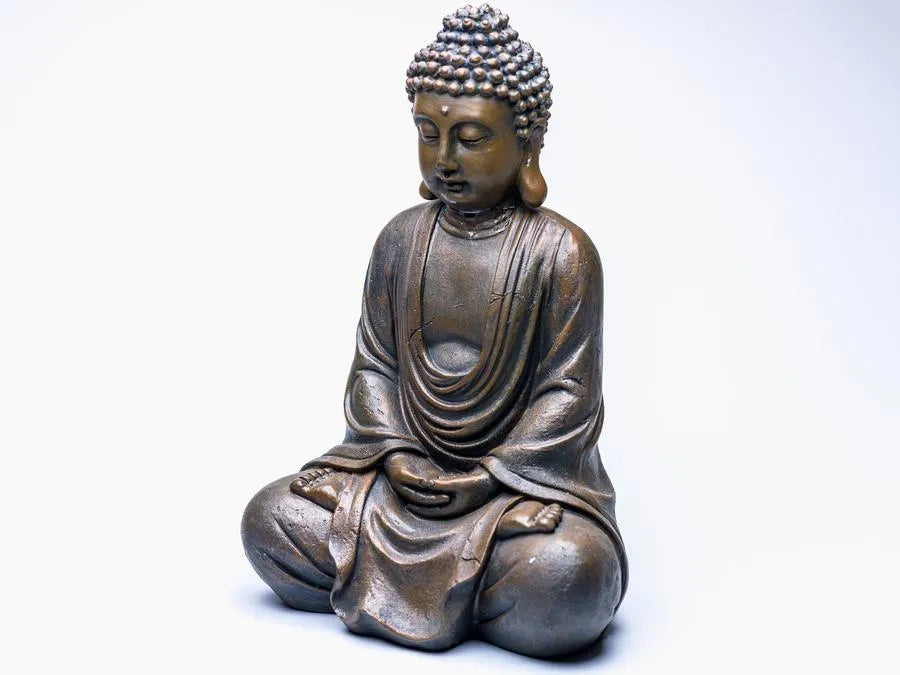
The sitting Buddha pose is a profound embodiment of meditation and the inner journey toward awakening. Typically depicted in the lotus (padmasana) or vajrasana posture, often accompanied by mudras like Dhyana or Bhumisparsha, this pose visually communicates the power of stillness. A stable base, an aligned spine, and focused hands direct energy inward, cultivating concentration and insight, leading to clarity and liberation. In many traditions, the seated form is the primary icon for shrine altars, anchoring daily practice and modeling the physical conditions conducive to formal meditation. Understanding seated iconography helps practitioners select statues that align with their contemplative aims and encourage consistent practice, seamlessly connecting to the meanings of mudras discussed next.

How Does the Standing Buddha Symbolize Fearlessness and Compassion?

The standing Buddha pose signifies outward-facing compassion and a readiness to engage with the world. Often paired with the Abhaya (protection) or Varada (giving) mudras, these figures embody reassurance and generosity in action. The verticality and presence of standing figures convey a dynamic balance between stillness and motion, symbolizing a compassionate response to worldly suffering. This form is frequently found on temple façades, at waypoints, and as threshold guardians, serving as a constant reminder that practice extends beyond the cushion into ethical action. Recognizing the symbolism of standing iconography helps you choose statues that foster courage and active service in your daily life, guiding placement where the figure can offer a sense of watchfulness over a room or entrance.

What Is the Spiritual Meaning of the Reclining Buddha and Parinirvana?

The reclining Buddha depicts the Buddha at the moment of his passing into parinirvana, offering a profound teaching on the mechanism of release from the cycle of birth and death and the ultimate spiritual result of final liberation. Visual cues—such as the serene countenance, composed limbs, and recumbency on the right side—signal acceptance of impermanence and invite contemplative reflection on mortality and non-attachment. In practice, reclining images serve as powerful reminders on altars or in sanctuaries, prompting reflection that cultivates compassion and the surrender of clinging. Understanding the meaning of the reclining pose guides respectful placement and use, making it ideally suited for contemplative displays where impermanence is a central theme.

Why Is the Walking Buddha Associated with Grace and Spreading Dharma?

The walking Buddha captures the dynamic essence of teaching and compassionate movement. A forward step, relaxed limb alignment, and an engaged gaze communicate the intention to spread Dharma through example and travel. This iconography inspires active practice, encouraging practitioners to integrate mindfulness into motion, service, and community outreach, rather than confining it to solitude. Historically, walking Buddhas marked pilgrimage routes and public spaces; in domestic settings, they serve to motivate the daily enactment of ethical practices. Selecting a walking-form statue can therefore signify a commitment to integrating meditation into active compassion and community-oriented service.

How Do Buddha Mudras Communicate Spiritual Messages Through Hand Gestures?

Close-up of Buddha statue hands in mudras, illustrating spiritual messages through gestures

A mudra is a deliberate hand gesture used in Buddhist sculpture and practice to encode specific spiritual messages. Mudras function by visually signaling doctrinal states—such as protection, meditation, or teaching—and by offering a focal point for meditative visualization, subtly shifting a practitioner’s attention and emotional state. The mechanism is semiotic and ritualistic: the hand shape maps onto a doctrinal meaning, which in turn guides the body and mind during devotion or contemplation, cultivating qualities like fearlessness, concentration, or generosity. For practical application, recognizing mudra imagery helps you choose statues that reinforce a particular intention—protection at the door (Abhaya), deep concentration at the altar (Dhyana), or generosity at a community shrine (Varada). Below is a reference table summarizing common mudras and their uses for quick lookup.

Common mudras and short practical notes:

Mudra Symbolic Meaning Associated Pose/Use
Dhyana Deep meditation and inner concentration Seated meditation on altars
Abhaya Fearlessness, protection, reassurance Standing or teaching figures near entrances
Bhumisparsha Earth-witness to enlightenment Seated Buddha at moment of awakening
Varada Charity, giving, compassion Seated or standing, blessing devotees
Dharmachakra Turning the wheel of Dharma, teaching Seated or standing, lecture contexts
Vitarka Intellectual discussion, reasoning Teaching images with hand in discussion
Namaskara Respect, greeting, devotion Small devotional images and gestures

What Are the Most Common Buddha Mudras and Their Meanings?

The most prevalent mudras—Abhaya, Dhyana, Bhumisparsha, Varada, Dharmachakra, Vitarka, and Namaskara—each translate a simple gesture into a distinct doctrinal or ethical quality, used across various poses to contextualize the Buddha’s activity. These gestures work by drawing the viewer’s attention and serving as visual mantras during practice: the Abhaya mudra’s raised palm calms fear; the Dhyana mudra’s hands in the lap cultivate concentration; the Bhumisparsha mudra’s earth-touching gesture grounds claims to awakening. Practically, selecting a statue whose mudra aligns with your intention enhances its function as a meditation tool, making it easier to sustain relevant states—confidence, stillness, or generosity—during practice sessions. This understanding allows you to match devotional objects to real-world needs in personal or communal settings.

The specific rendering of the Buddha's head, the hand gestures known as mudras, the postures of the legs whether seated or standing, and the accompanying regalia are all designed to serve a heuristic purpose for the practitioner.

Symbolism in Buddhist Iconography: Mudras, Postures, and Devotional Significance

An examination of the varied representations of the Buddha across Asia reveals recurring thematic elements. The specific rendering of the Buddha's head, the hand gestures known as mudras, the postures of the legs whether seated or standing, and the accompanying regalia are all designed to serve a heuristic purpose for the practitioner. A comprehension of these facets of Buddhist art facilitates a more profound internalization of the narrative of Siddhartha and the path of Buddhahood.

Symbols in Chandra Shyam Dangol's stone sculptures, YP Sharma, 2022

How Does the Dhyana Mudra Represent Meditation and Wisdom?

The Dhyana mudra, characterized by hands resting in the lap (often with the right hand over the left and thumbs lightly touching), visually represents the mechanism of unified attention and balanced energy that cultivates deep concentration and insight. This posture supports the psychological process of centering and encourages a steady breath and inward focus, making it a favored icon for seated altar statues intended to foster samadhi and contemplative clarity. Symbolically, the Dhyana mudra signifies readiness for inner work and reassures practitioners that the statue embodies the posture and mental attitude conducive to wisdom. Incorporating a Dhyana statue into your meditation space helps anchor your sitting practice and sustain disciplined attention.

What Is the Significance of the Abhaya Mudra for Fearlessness and Protection?

The Abhaya mudra—the raised right hand with the palm facing outward—serves as a visual promise of safety and protection. Its mechanism is communicative: it reassures devotees and symbolizes the Buddha’s role as a protector from fear through the power of Dharma. Historically, the Abhaya mudra is often seen on standing figures greeting pilgrims or guarding temple entrances, fostering a sense of calm and trust in sacred spaces. In the home, Abhaya imagery can serve as a focal point for cultivating courage and resilience during challenging times, and it can be placed in highly visible locations to psychologically reinforce a sense of security. Recognizing the Abhaya mudra’s significance helps you select statues that promote fearlessness and ethical steadiness in the face of life’s challenges.

How Do Varada and Bhumisparsha Mudras Symbolize Compassion and Enlightenment?

The Varada mudra, with its open downward-facing hand, symbolizes giving and compassionate generosity, while the Bhumisparsha mudra, the earth-touching gesture, represents the Buddha’s witnessing of his enlightenment. These are complementary mechanisms that translate outward ethical action (giving) and inward realization (awakening) into sculptural language. The Varada mudra appears on statues intended to bless and promise aid, practically inspiring acts of charity and service among viewers. The Bhumisparsha mudra, conversely, anchors narratives of enlightenment and exemplifies the decisive moment of realization. Together, these mudras offer a balanced perspective on spiritual life: compassionate response and definitive insight, guiding practitioners to integrate generosity with contemplative depth. Your choice between them depends on whether your intention emphasizes service or awakening.

What Are the Distinct Regional Buddha Statue Styles and Their Cultural Influences?

Diverse Buddha statues showcasing regional styles and cultural influences in Buddhism

Regional statue styles are rich tapestries woven from local artistic conventions, religious priorities, and historical encounters. Identifying a statue’s origin helps unlock specific spiritual and cultural insights: Gandhara’s Greco-Roman realism, Mathura’s indigenous expressiveness, Thai elegance, Khmer monumentality, Tibetan ornamentation, and Chinese softness each convey distinct devotional temperaments and ritual functions. The mechanism linking style to meaning is aesthetic coding: facial types, drapery, usnisha shapes, and ornamentation signal doctrinal emphasis and the statue’s likely role in ritual life. For buyers and practitioners, recognizing these markers supports thoughtful selection and placement, ensuring that form and function align with your intended spiritual use. The following table maps region/style to artistic characteristics and contextual spiritual notes for quick identification and interpretation.

Regional style reference table:

Region/Style Artistic Characteristics Spiritual/Contextual Notes
Gandhara Hellenistic realism, natural drapery Emphasizes humanized Buddha; historical cross-cultural exchange
Mathura Rounded anatomy, expressive faces Emphasizes spiritual presence and devotional intimacy
Thai Slender form, flame usnisha, elegant lines Focus on devotional grace and ritual poise
Khmer Monumental scale, robust forms Temple-centered, architectural integration, public worship
Tibetan Elaborate ornamentation, gilt bronze Vajrayana ritual function, deity visualizations
Chinese Softer, rounded forms, integration with folk figures Local devotional practices; includes Budai as folkloric figure

How Do Indian Styles Like Gandhara and Mathura Reflect Early Buddhist Iconography?

Gandhara and Mathura represent pivotal early divergences in South Asian Buddhist sculpture. Gandhara showcases Greco-Roman realism, evident in its naturalistic drapery and physiognomy, while Mathura favors indigenous stylization, characterized by expressive faces and robust anatomy, to convey spiritual presence. The mechanism at play here is cross-cultural synthesis: Gandhara’s Hellenistic influences contributed to more humanized images of the Buddha, making the figure more personally accessible and influencing devotional practice. Mathura’s local idioms, conversely, emphasized sacred presence through stylized forms. For practitioners and collectors, distinguishing these styles aids respectful interpretation and situates images within historical devotional trends that shaped later canonical forms. Understanding these differences helps appreciate why similar poses can evoke different feelings across regional traditions.

What Are the Characteristics of Southeast Asian Buddha Statues in Thai and Khmer Traditions?

Thai statues typically feature elongated proportions, refined contours, and a flame-like usnisha symbolizing spiritual illumination and graceful devotional posture. Khmer statues, in contrast, lean towards monumental volume, architectural integration, and a sense of temple-scale authority. These stylistic mechanisms—proportion and surface treatment—create distinct spiritual effects: Thai forms invite intimate devotion and elegiac contemplation, while Khmer forms convey communal, ritual power suited for temple contexts. Practically, these stylistic tendencies inform placement choices: Thai-style pieces are well-suited for home altars and personal practice, while Khmer-inspired forms are ideal for larger communal spaces where monumentality supports collective ritual. Appreciating these differences helps align your statue choice with the intended ritual scale and devotional ambiance.

How Do Tibetan Buddha Statues Express Majestic Spiritual Forms?

Tibetan Buddhist sculpture frequently utilizes gilt bronze, polychrome finishes, and intricate iconographic details—such as crowns, implements, and deity attributes. Consequently, these statues often function as ritual implements for empowerment and tantric practice rather than solely as meditative icons. The mechanism here is symbolic loading: objects and ornamentation serve as semantic markers that facilitate complex deity visualizations and ritual transmissions central to Vajrayana practice, yielding devotional results of empowerment and participatory ritual efficacy. For practitioners, Tibetan forms are best employed within informed ritual contexts or as focal points for deity practice, recognizing that their ornamentation encodes specific soteriological functions. This distinction clarifies why Tibetan icons require different handling and placement compared to simpler meditative images.

What Defines Chinese Buddha Statues and the Role of the Laughing Buddha?

Chinese statues often exhibit softer, rounded physiognomy and integrate local folklore into religious practice. Budai, the Laughing Buddha, functions as a folkloric figure symbolizing abundance and joy, distinct from representations of Gautama Buddha—a crucial distinction for respectful display. The mechanism is cultural assimilation: local narratives and popular religiosity shape how images are used, resulting in devotional objects that serve both spiritual and domestic auspicious functions. Practically, practitioners should avoid conflating Budai with historical Buddha iconography when selecting statues for formal meditation altars. Instead, Budai is best placed where its folk meanings—abundance and good cheer—can enhance household or decorative settings. Understanding this separation helps maintain doctrinal clarity and cultural respect.

Which Materials Are Used in Buddha Statues and What Do They Symbolize Spiritually?

The materials used in Buddha statues—bronze, stone, wood, resin, and cast iron—carry layered symbolic meanings and practical implications. Bronze suggests enduring tradition and ritual continuity; stone conveys permanence and solidity; wood embodies organic warmth and transience; resin offers accessibility and reproducibility; and cast iron communicates austerity and minimalism. The mechanism linking material to spiritual meaning operates through metaphor and durability: lasting materials evoke notions of timelessness and continuity, while more perishable ones remind viewers of impermanence and the need for human care. For purchasers and altar designers, material choice impacts durability, suitability for indoor or outdoor use, and care requirements. This section maps these considerations in a practical table to assist your selection. We’ll also highlight handcrafted options from mission-focused suppliers that align material, artisan practice, and spiritual authenticity.

Material comparison table for symbolic and practical guidance:

Material Spiritual/Physical Attribute Practical Care/Usage Note
Bronze Longevity, ritual tradition Durable; suitable for indoor/outdoor with occasional polishing
Stone Permanence, groundedness Very durable; heavy and best for fixed displays
Wood Warmth, impermanence, approachable Indoor use preferred; protect from humidity and pests
Resin Accessibility, democratized devotional access Lightweight and affordable; avoid prolonged UV exposure
Cast Iron Minimalist austerity, resilience Very durable; may develop patina—good for rustic altars

How Does Handcrafting by Sangha House Artisans Enhance Spiritual Authenticity?

Handcrafting at Sangha House embodies intentional artisan practice within a framework of community-supported purpose. Each handcrafted piece carries not only material meaning but also the ethical narrative of communal care, fostering a spiritual authenticity that deepens a practitioner’s connection to their object of devotion. The mechanism is relational: knowing a statue was crafted mindfully in a supportive environment encourages a reciprocal relationship between owner and object, enhancing practice and respect for the materials. Crucially, proceeds from Sangha Shop sales fund Sangha House’s meditation, addiction recovery, and wellness programs, directly linking purchases to community healing and radical accessibility efforts. These handcrafted pieces, such as the Large Resin Buddha - Handcrafted at Sangha House, may exhibit slight variations due to their handmade nature, which enhances their uniqueness and invites attentive care consistent with contemplative practice.

How Can You Choose and Place a Buddha Statue to Support Mindful Living and Well-being?

Selecting and placing a Buddha statue begins with aligning its pose, mudra, material, and scale with your personal intentions—whether for calm, courage, compassion, or study. Then, situate the object in a respectful, elevated, and clean space that supports your daily practice. The mechanism of alignment works by creating environmental cues that repeatedly trigger the intended mental state, strengthening habits and well-being through embodied practice over time. Practical placement involves orientation (facing the statue toward room entrances or the primary meditation area), elevation (keeping statues off the floor on a raised platform), and environmental considerations (avoiding excessive humidity or direct sunlight for sensitive materials). The following checklist offers actionable steps for selection and placement to support mindful living and inspire immediate changes.

Steps to choose and place a Buddha statue:

  • Align your intention with pose and mudra: choose Dhyana for meditation, Abhaya for protection, Varada for generosity.
  • Consider material and scale: use resin for portable practice, bronze for ritual stability, stone for outdoor memorials.
  • Respectful placement: elevate the statue, keep the area clean, and avoid placing images at foot-of-bed level.
  • Orientation and room choice: face the statue toward the entrance or meditation cushion and avoid bathrooms or cluttered zones.

What Symbolism Should Guide Your Selection of a Buddha Statue for Meditation?

Choose a statue whose pose and mudra directly reflect your primary meditative aim: the Dhyana pose for concentration and insight, the Abhaya pose for courage and protection, the Varada pose for cultivating generosity and compassion, and the Bhumisparsha pose for awakening-focused practice. The mechanism is intentional resonance: the statue’s imagery repeatedly cues the associated mental state and ethical aspiration, making your practice more coherent and habit-forming. Additionally, consider the material and scale to ensure the object supports your daily routine—small resin pieces can serve as portable prompts, while larger bronze images can establish a formal altar environment. Matching these symbolic elements to your practical constraints ensures the statue functions as an effective meditation tool rather than mere decoration.

Where Is the Best Placement for Buddha Statues in Your Home or Meditation Space?

Best placement practices prioritize respect and visibility. Position statues on elevated, clean surfaces at or above eye level, facing them toward the room entrance or your meditation cushion. Avoid placing them in bedrooms (especially at the foot of the bed) or on the floor, where the image might be perceived as disrespected. The mechanism by which placement supports practice is environmental cueing: consistent, respectful placement minimizes distractions and increases the likelihood of daily engagement with the image and with meditation itself. Recommended room-specific placements include a small shrine or shelf in a quiet corner for personal practice, a larger central altar for communal spaces, and a stoic standing figure near entrances to signify protection and ethical presence. These placement guidelines uphold cultural sensitivity while optimizing the statue’s role as a practical meditation aid.

How Do Sangha Shop’s Handcrafted Statues Support Addiction Recovery and Mindfulness?

Purchasing handcrafted pieces from Sangha Shop supports a mission-aligned model: proceeds from every sale fund Sangha House’s meditation, addiction recovery, and wellness programs in Chicago, directly linking individual purchases to community healing and radical accessibility. The mechanism is direct funding: each sale channels resources to free classes, meetings, and therapeutic offerings, transforming the act of buying a handcrafted statue into a form of social support for individuals in recovery and those seeking mindful care. For practitioners who value ethical procurement, selecting items like the Large Resin Buddha - Handcrafted at Sangha House or the Cast Iron Buddha Statue | Minimalist Blank Face | 6" offers both a functional meditation tool and a tangible way to contribute to community-based well-being. This alignment of product, practice, and purpose makes mindful consumption an act of mutual care.

What Is the Historical Evolution of Buddha Statue Iconography?

Buddha statue iconography evolved from aniconic symbols—such as stupas, footprints, and wheels—to anthropomorphic representations. This shift was driven by evolving devotional needs, changing patronage patterns, and cross-cultural exchange, which demanded more explicit figural imagery. This evolution fundamentally altered how practitioners related to the Buddha and how images functioned in ritual life. The mechanism behind this evolution included increasing temple patronage, the development of iconographic canons, and cultural interactions like the Hellenistic influence in Gandhara, all of which fostered new sculptural languages and expanded devotional practices. Understanding this history clarifies why regional styles differ and how symbolic elements like the usnisha or urna became standardized, shaping modern interpretations and choices for practice.

How Did Early Symbolic Representations Develop into Anthropomorphic Buddha Statues?

Early Buddhist communities represented the Buddha’s presence through aniconic symbols like stupas, wheels, and footprints. The eventual transition to anthropomorphic images arose from evolving devotional needs, shifts in patronage, and cross-cultural interactions that favored figural worship. The mechanism involved a confluence of liturgical demand for a representational focus, royal and lay patronage funding sculptural programs, and artistic exchange that introduced new aesthetic possibilities. This enabled images to serve as more accessible meditation supports. This transition established the doctrinal and aesthetic frameworks that later periods refined into canonical poses, mudras, and regional styles, making the Buddha’s image a central tool for both personal practice and communal ritual life.

What Are the Key Periods Influencing Buddha Art: Gandhara, Mathura, and Gupta?

Gandhara introduced Greco-Roman naturalism and drapery, humanizing the Buddha. Mathura developed indigenous stylized anatomy and expressive faces, emphasizing spiritual presence. The Gupta period synthesized earlier traditions into an idealized canonical form characterized by serenity and proportion. Each period contributed specific mechanisms that shaped later South Asian and global Buddhist imagery. These historical contributions produced visual vocabularies—drapery, proportion, facial types—that continue to inform how statues are interpreted and used today. Understanding these periods helps modern practitioners and collectors situate images within their lineage and meaning, facilitating respectful interpretation and historically informed selection.

What Are the Spiritual Meanings of Non-Gautama Buddha Statues Like the Laughing Buddha?

Non-Gautama figures, such as Budai (the Laughing Buddha) and various deity statues, serve distinct cultural and ritual functions that differ from images of the historical Buddha. Understanding these distinctions prevents conflation and supports respectful display and practice. The mechanism is role differentiation: while Gautama Buddha images primarily model awakening and doctrinal states, figures like Budai act as folk symbols of abundance and joy, and deity forms perform specific ritual or healing roles within tantric and devotional contexts. For ethical and practical display, devotees should match the figure’s intended function to its location and use—Budai in domestic, auspicious roles; deity images in ritualized contexts; Gautama Buddha on formal meditation altars. This clarity preserves doctrinal nuance and enhances the statue’s role as a purposeful meditation tool.

Who Is the Laughing Buddha and What Does He Symbolize?

Budai, commonly known as the Laughing Buddha in popular culture, is a folkloric Chinese monk figure associated with abundance, generosity, and good cheer. He is not a direct representation of Gautama Buddha. His smiling countenance and rotund form symbolize material and emotional plenty within East Asian contexts. The mechanism is cultural personification: Budai’s image embodies popular hopes for prosperity and contentment and is frequently used in homes and businesses for auspicious meaning, rather than on formal meditation altars. Practically, those seeking a meditation-focused object should avoid substituting Budai for Gautama Buddha when doctrinal clarity is important. Instead, Budai is best used where folk symbolism and decorative auspiciousness are appropriate. Distinguishing these roles preserves respect and functional integrity in devotional environments.

The question then concerned several hand 'poses,' specifically intended to establish the symbolic character of statues by evoking particular episodes from Buddhist legend.

Mudra: Symbolic Gestures in Japanese Buddhist Sculpture

The question then concerned several hand 'poses,' specifically intended to establish the symbolic character of statues by evoking particular episodes from Buddhist legend.

Mudra: A study of symbolic gestures in Japanese Buddhist sculpture, 2018

How Do Other Buddhist Deity Statues Differ in Style and Spiritual Significance?

Buddhist deity statues—such as the Medicine Buddha or Avalokiteshvara—differ from Buddha images in their iconographic attributes (implements, crowns, multiple arms) and in their ritual function. Deities often serve as objects for specific sadhanas, healing practices, or compassion cultivation, rather than as straightforward models of the historical Buddha’s awakening. The mechanism is symbolic specialization: implements and visual attributes encode specialized powers and blessings that support particular practices—medicine and healing, compassion practices, or tantric visualizations—producing tangible results for devotees who engage in corresponding rituals. Recognizing these differences ensures appropriate placement, handling, and use of deity images, avoiding conflation with canonical Buddha representations.

This article has mapped poses, mudras, regional styles, materials, historical evolution, and non-Gautama figures to practical guidance for meditation and mindful living. For readers ready to align purchases with purpose, consider mission-aligned handcrafted options such as the Antiqued Resin Buddha Statue (Gold and Turquoise) and the Large Resin Buddha - Handcrafted at Sangha House. Both offer a meaningful devotional presence while supporting Sangha House’s meditation and recovery programs through proceeds from sales.

Frequently Asked Questions

What is the significance of the materials used in Buddha statues?

The materials chosen for Buddha statues—such as bronze, stone, wood, resin, and cast iron—carry distinct symbolic meanings. For example, bronze signifies longevity and ritual tradition, while stone conveys permanence and solidity. Wood represents warmth and impermanence, and resin offers accessibility for broader audiences. Cast iron communicates minimalism and resilience. Understanding these material qualities helps practitioners select statues that align with their spiritual intentions and practical needs, ensuring the chosen statue serves effectively as both a meditation tool and a meaningful decorative piece.

How can I ensure my Buddha statue is placed respectfully in my home?

To ensure respectful placement of a Buddha statue, position it on an elevated surface, ideally at or above eye level. The statue should face the entrance of the room or the primary meditation area, avoiding cluttered spaces or bedrooms, particularly at the foot of the bed. Maintaining a clean and distraction-free area enhances the statue's role as a focal point for meditation and mindfulness, reinforcing the spiritual atmosphere of your space.

What role do non-Gautama Buddha figures play in Buddhist practice?

Non-Gautama figures, such as Budai (the Laughing Buddha) and various deities, fulfill distinct cultural and ritual functions that differ from images of the historical Buddha. While Gautama Buddha statues primarily symbolize awakening and doctrinal teachings, figures like Budai represent abundance and joy, often used in domestic settings for auspicious meanings. Recognizing these distinctions is crucial for respectful display and practice, ensuring each figure is placed according to its intended function and context.

How do I choose a Buddha statue that aligns with my meditation goals?

Selecting a Buddha statue that aligns with your meditation goals involves considering the pose and mudra that best reflect your intentions. For instance, choose the Dhyana pose for concentration, the Abhaya pose for courage, or the Varada pose for generosity. Additionally, consider the material and size of the statue to ensure it complements your practice space and lifestyle. This thoughtful selection process enhances the statue's effectiveness as a meditation tool, making it a meaningful part of your spiritual journey.

What are the differences between various regional Buddha statue styles?

Regional Buddha statue styles, including Gandhara, Mathura, Thai, Khmer, Tibetan, and Chinese, reflect unique artistic conventions and cultural influences. For example, Gandhara features Greco-Roman realism, while Mathura emphasizes indigenous expressiveness. Thai statues are known for their elegance, whereas Khmer statues are monumental in scale. Tibetan statues often incorporate elaborate ornamentation, and Chinese forms integrate local folklore. Understanding these differences helps practitioners appreciate the cultural context of each statue and select pieces that resonate with their spiritual practices.

How can handcrafted Buddha statues enhance my meditation practice?

Handcrafted Buddha statues, such as those from Sangha House, enhance meditation practice by integrating intentional artisan craftsmanship with community-supported purpose. Each piece carries a unique story and ethical significance, fostering a deeper connection between the practitioner and the statue. Knowing that the statue supports community healing initiatives adds a layer of meaning to its presence in your space, reinforcing the relationship between personal practice and collective well-being, ultimately enriching the meditative experience.

What should I consider when selecting a Buddha statue for outdoor use?

When selecting a Buddha statue for outdoor use, prioritize material durability and weather resistance. Stone and cast iron are excellent choices due to their permanence and ability to withstand the elements. Ensure the statue is placed in a respectful and visible location, ideally elevated to prevent damage from ground moisture. Additionally, consider the statue's size and scale in relation to the outdoor space to maintain environmental harmony. Proper care and maintenance will also extend the statue's lifespan and aesthetic appeal.